Kids & Family Zone
Money, but make it fun
Kids learn money the same way they learn anything else: small missions, repeated often. Here are age-by-age lessons, hands-on activities and a quiz you can do together at the kitchen table, in English or Spanish.

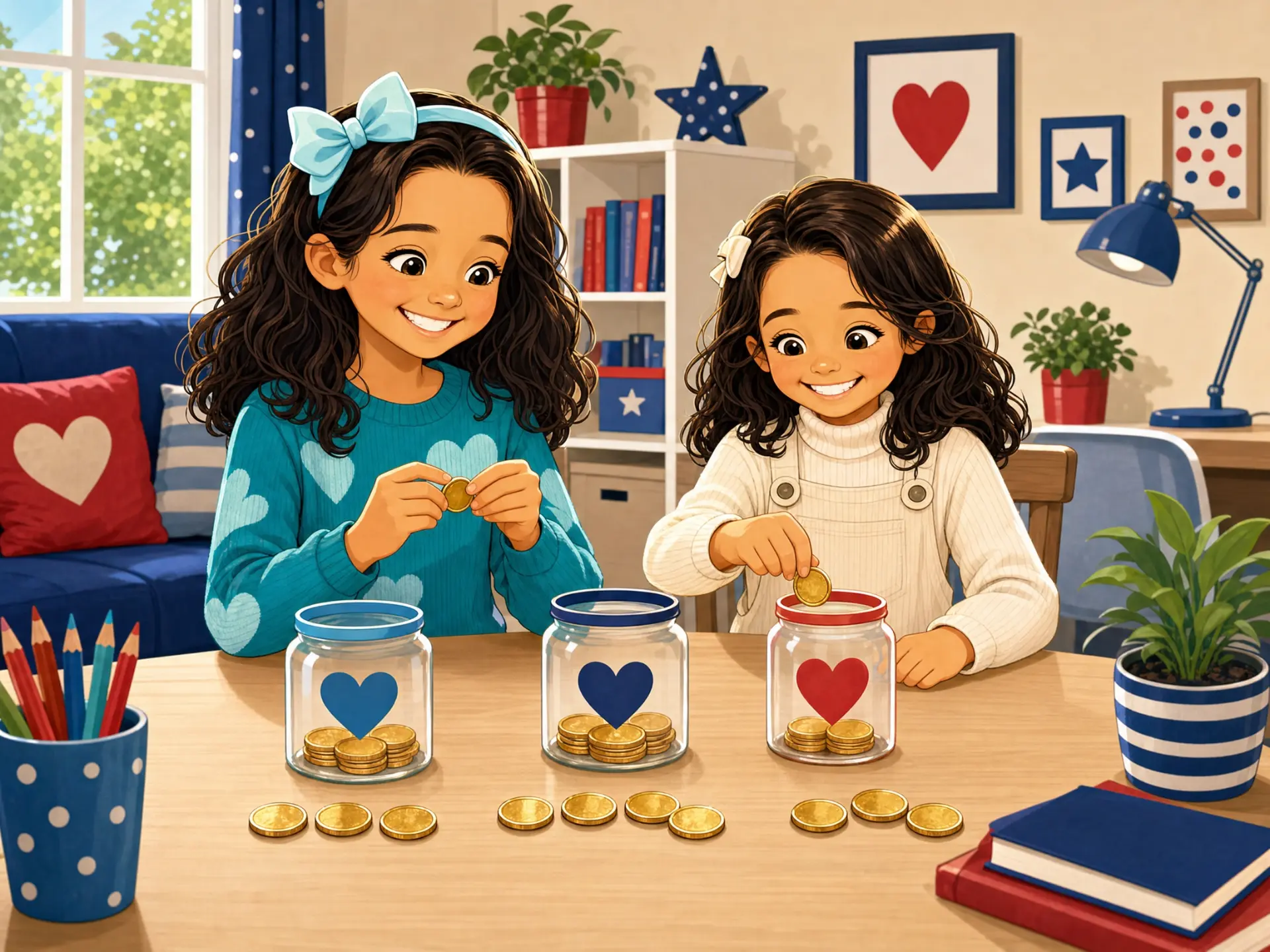
The three jars
Every dollar a kid receives gets a job the moment it arrives. Three jars, three jobs. That's the whole system.

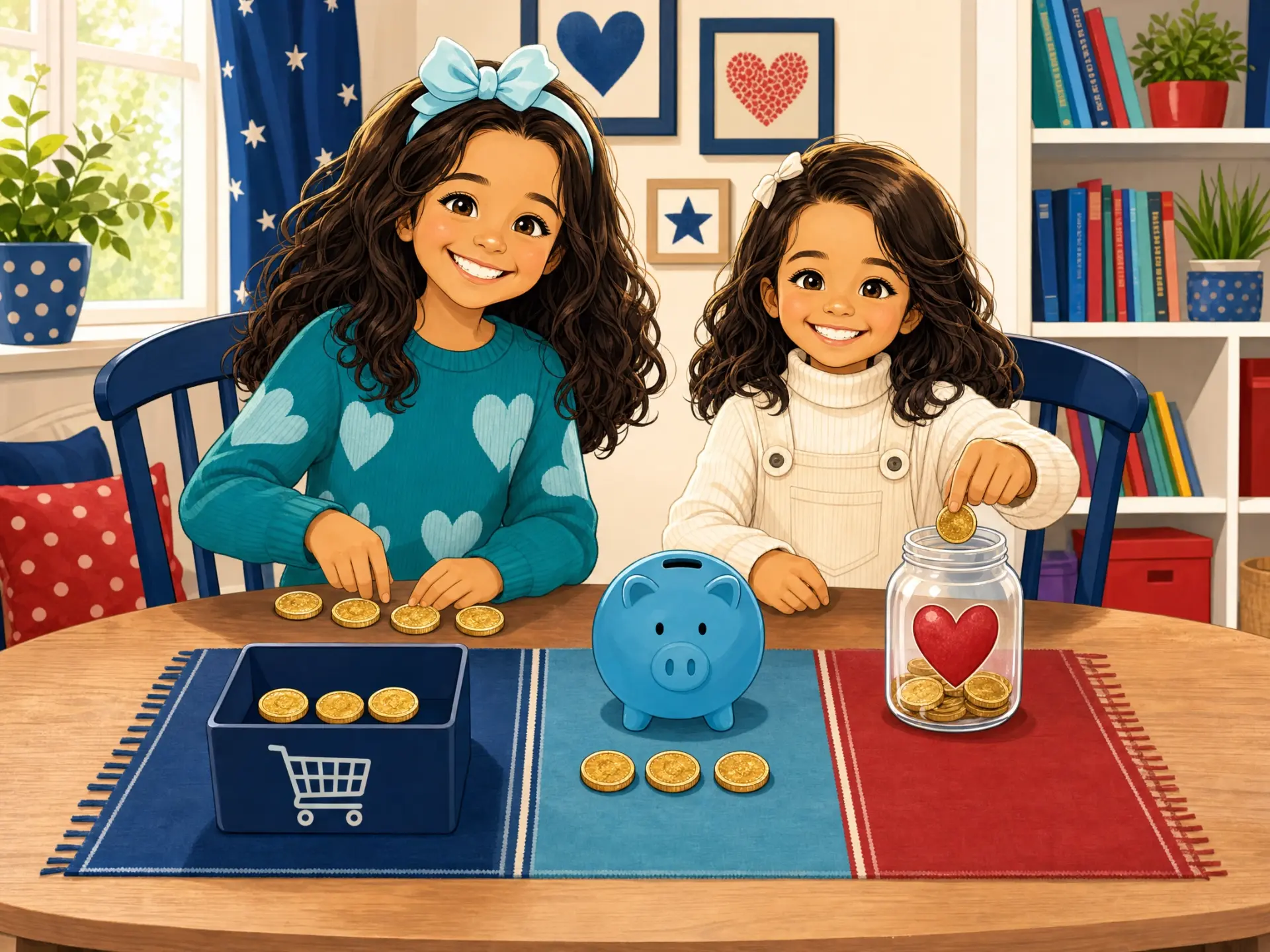
Money you don't touch yet. It's for the bigger thing you want in a month or a year, the bike, the game console, the trip.
Money you're allowed to enjoy right now, no permission needed. Learning to spend on purpose is a skill too.
Money for someone else, a gift, a donation, a friend in need. Kids remember generosity longer than any lecture.
Age by age
Money is real and it runs out
- Count coins and bills out loud. Name each one.
- Let them pay the cashier and take the change.
- Set one savings goal with a picture taped to the jar.
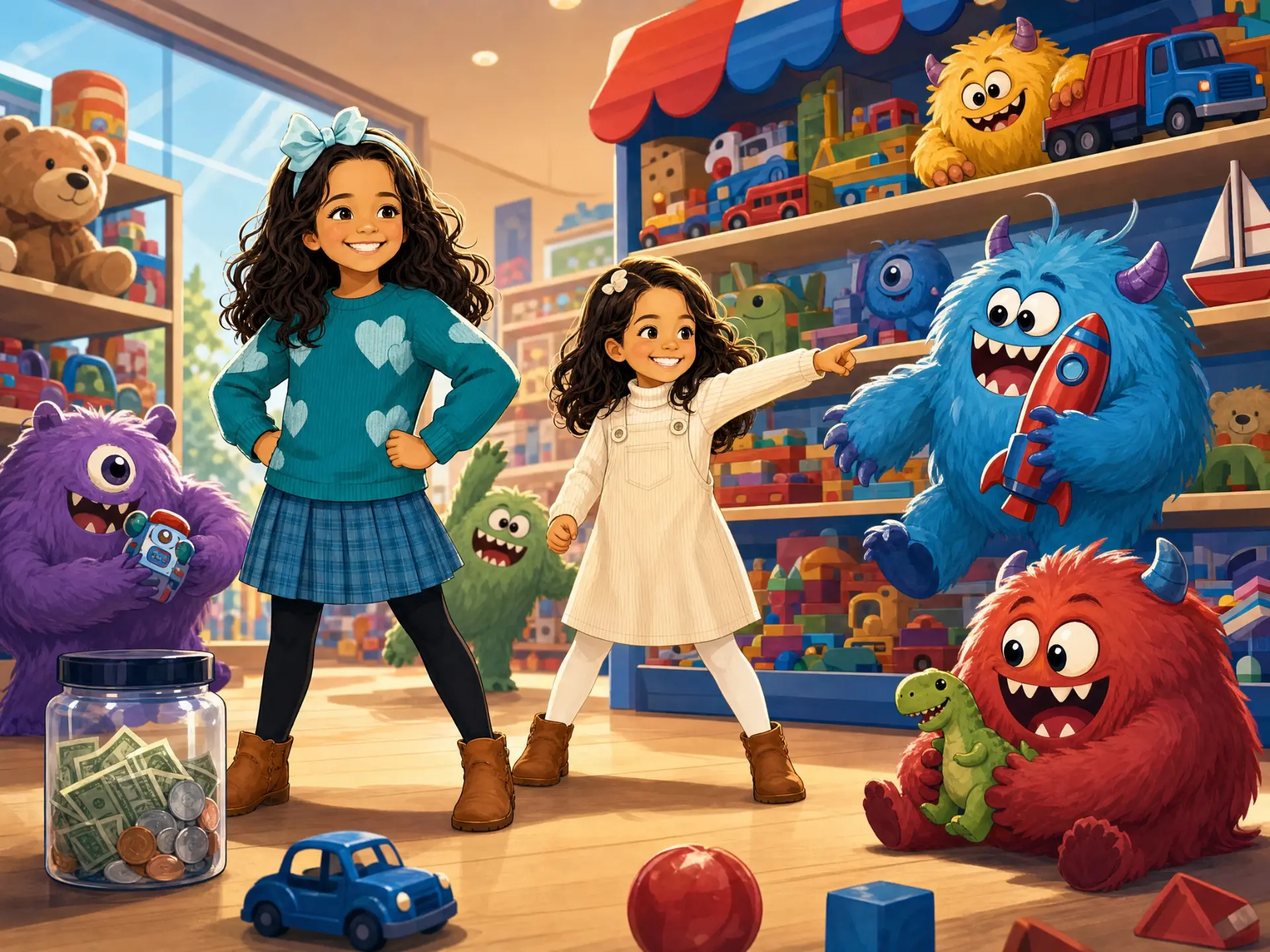
- Say no to one thing at the store and explain why.
Choices have trade-offs
- Give a small weekly allowance tied to real chores.
- Compare unit prices at the grocery store together.
- Have them wait 48 hours before any purchase over $20.
- Open a kid savings account and check the balance monthly.
Earning, banking and credit
- Read a real pay stub: gross pay, taxes, take-home.
- Build a first budget with the 70/20/10 framework.
- Explain how credit scores are built, and how they break.
- Show compound growth: $50/month starting at 16 vs. 26.
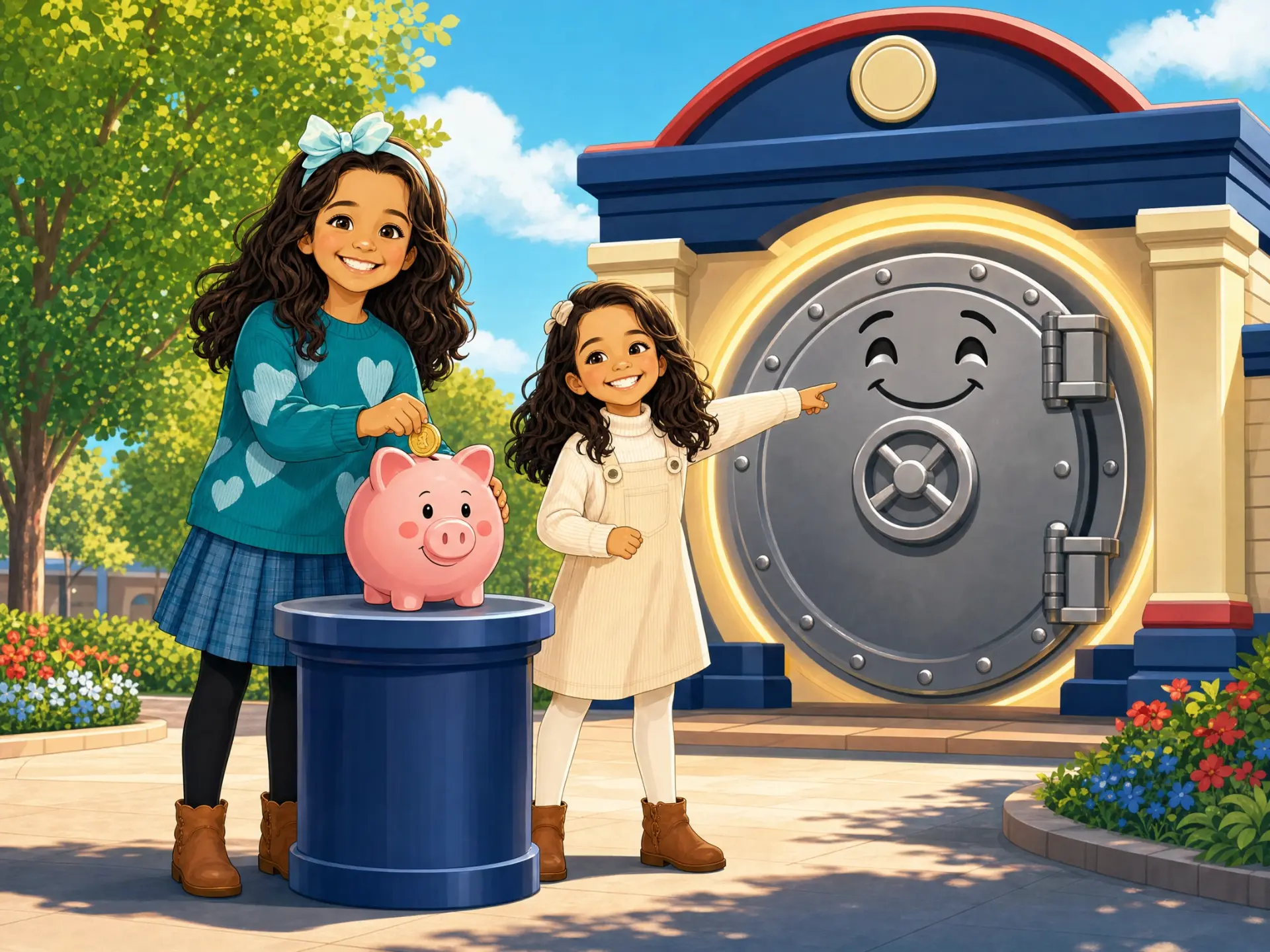
Type in the amount your kid earned this week and let them see exactly where it goes.
Save · 50%
$5.00
Spend · 40%
$4.00
Share · 10%
$1.00
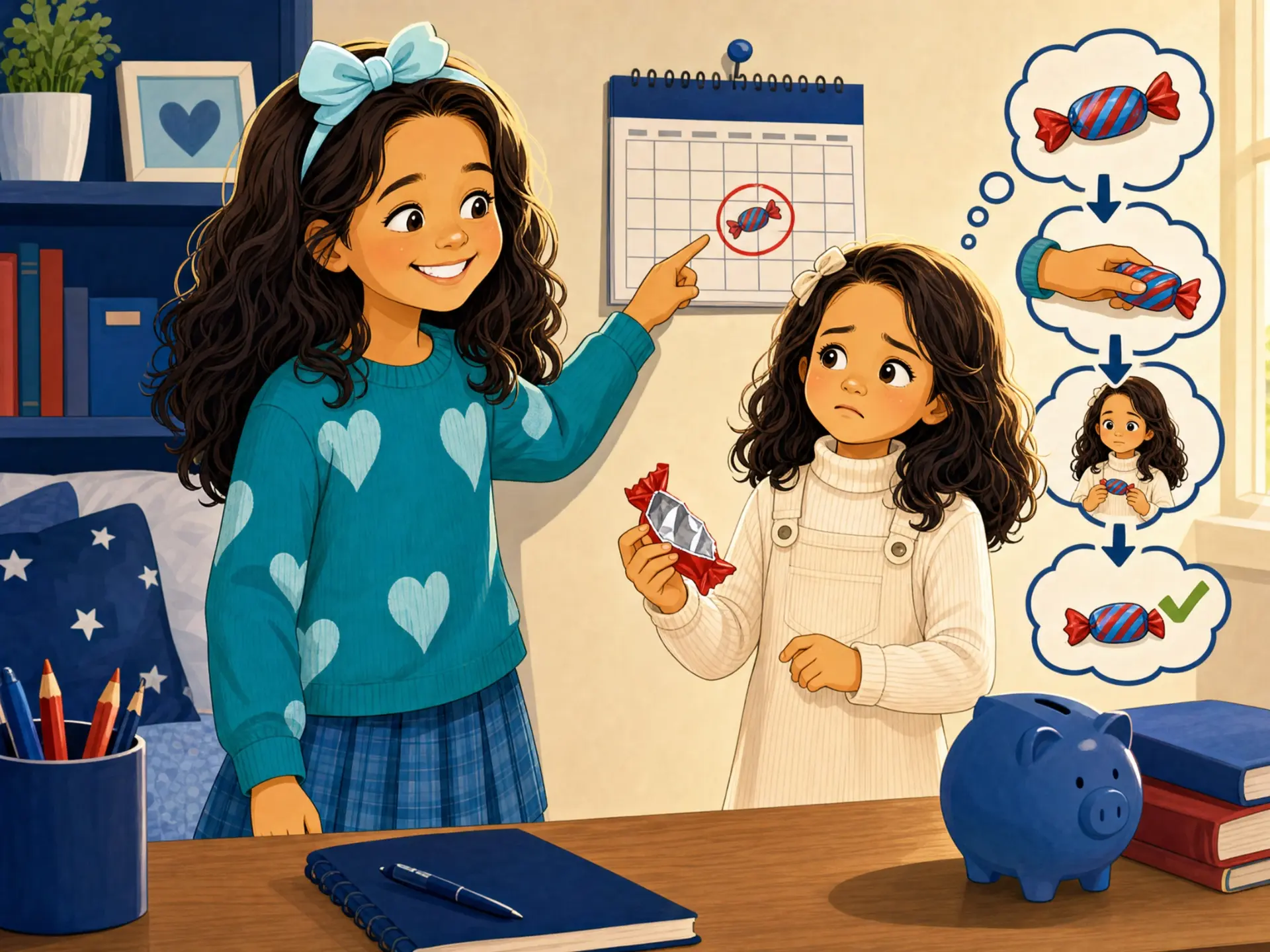
Five questions. No grades, no pressure, just talk through the answers together.
1. You get $10. What happens first?
2. What is a 'want' versus a 'need'?
3. Why does saving early matter?
4. What is a budget?
5. A friend asks to borrow your savings. What's the smart move?
Score: 0 / 5
Download the one-page Family Money Activity Sheet: three-jar plan, weekly money log, money missions checklist and a spot to write down what the quiz taught you.
For grown-ups
- Keep allowance small and predictable, consistency teaches more than amount.
- Let them make a bad purchase once. A $12 regret at age 10 is cheap tuition.
- Talk about your own money decisions out loud, including the trade-offs.
- Revisit the jars every month and celebrate when a savings goal is hit.

These activities are educational only and designed for families to use together. They are not investment, tax or legal advice.
Money Blueprint App
Create your free Money Blueprint account
Sign up to get your Financial Health Score, budgeting and debt payoff tools, and the bilingual learning center, powered by Financial Foundations.